

How Are You Coping? A Guide to Pool Borders
When you look at a swimming pool, your eyes naturally drift to the sparkling blue water or perhaps a dramatic waterfall feature. But there is one foundational element that quietly holds the entire aesthetic and structural design together: pool coping.
When planning a pool remodel or tackling a much-needed pool repair in the Dallas-Fort Worth area, understanding your structural options is critical. One foundational element that quietly holds your entire backyard design together is pool coping.
If you want to protect your investment from harsh Texas weather, choosing the right material and installation method is essential. Let’s break down exactly what pool coping is, how it works, and how to choose the best options for our unique local climate.
What is Pool Coping and What Does It Do?
Simply put, pool coping is the stone, brick, or concrete material used to cap the pool shell wall. It’s the literal edge of your swimming pool—the stone you step on right before you jump in, or what you hold onto while resting in the deep end.
In professional pool remodeling and repair, coping serves three critical structural functions:
- Prevents Water Penetration: It stops water from getting behind the pool shell and underneath the surrounding deck. Without proper coping, water would quickly erode the supporting soil, leading to shifted decks and cracked gunite.
- Improves Swimmer Safety: It provides a non-slip edge for hands and feet, while redirecting splashed water away from the pool and into nearby deck drains.
- Creates a Visual Framework: It acts as the stylistic transition between your pool tile and your decking, establishing the architectural tone of your entire backyard.
💡 Pro-Tip: If you are noticing water loss or cracked concrete, check out our guide on Understanding the Causes of Pool Cracks to catch problems early.
Custom Pool Coping Designs and Profiles
The “profile” refers to the shape of the stone’s edge facing the water. The profile you choose completely changes the look of your pool deck, moving it from traditional to modern.
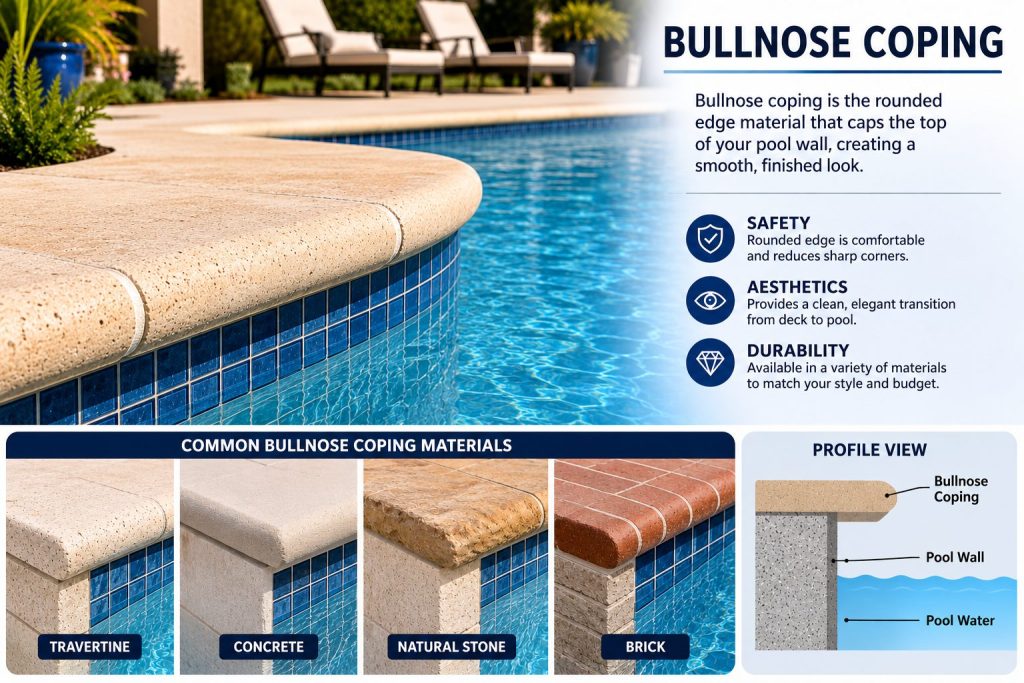
- Classic Bullnose Coping: The most popular traditional option. It features a fully rounded, smooth edge that is incredibly gentle on hands, feet, and swimsuits.
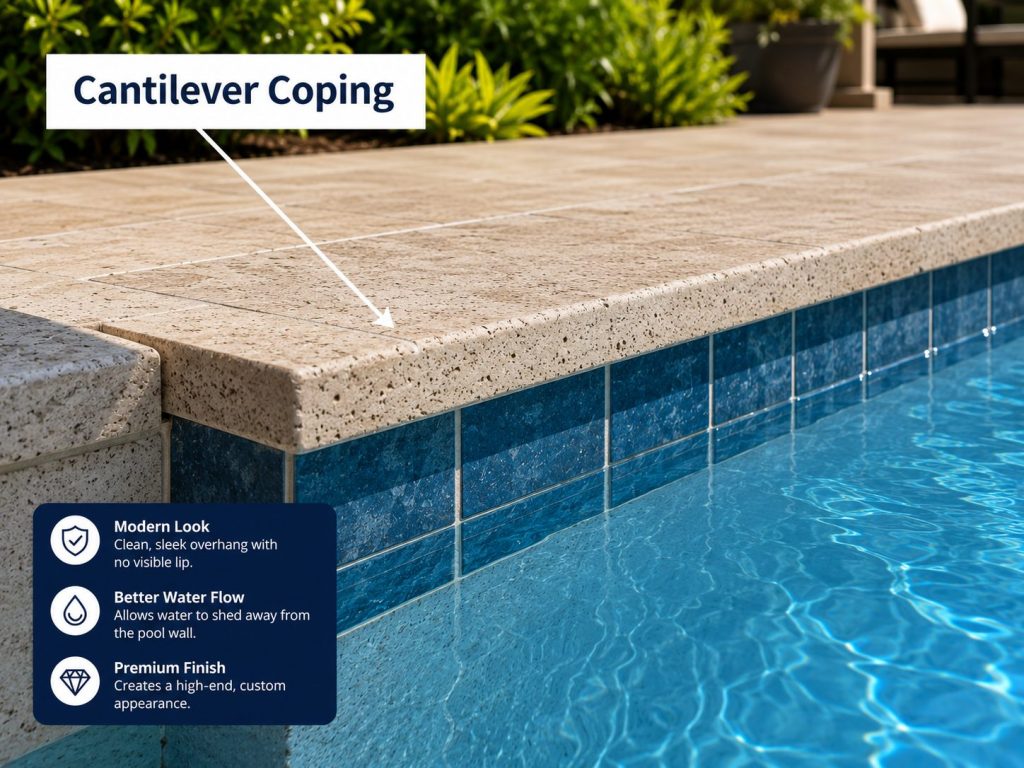
- Cantilever (Square Edge) Coping: A modern, minimalist favorite. The coping sits flat and extends slightly out over the water, creating a clean, crisp, geometric look.
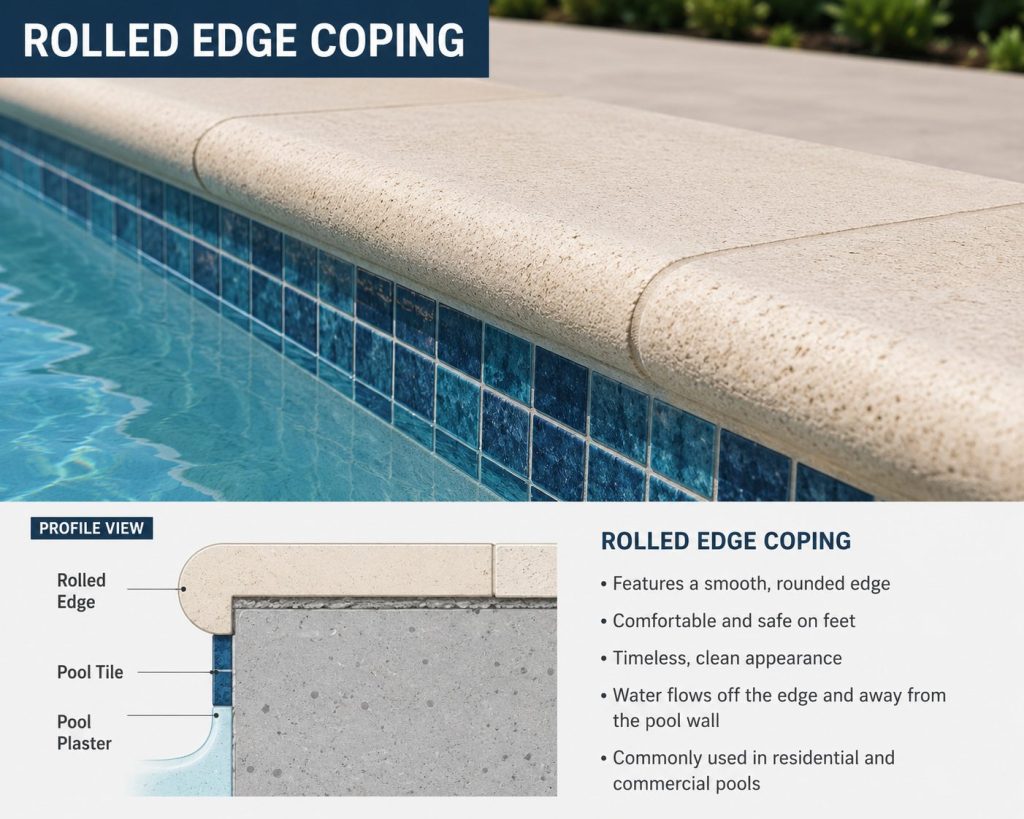
- Rolled Edge Coping: The stone curves up slightly at the very edge. This is frequently used on older, traditional brick pools and provides an excellent handhold.
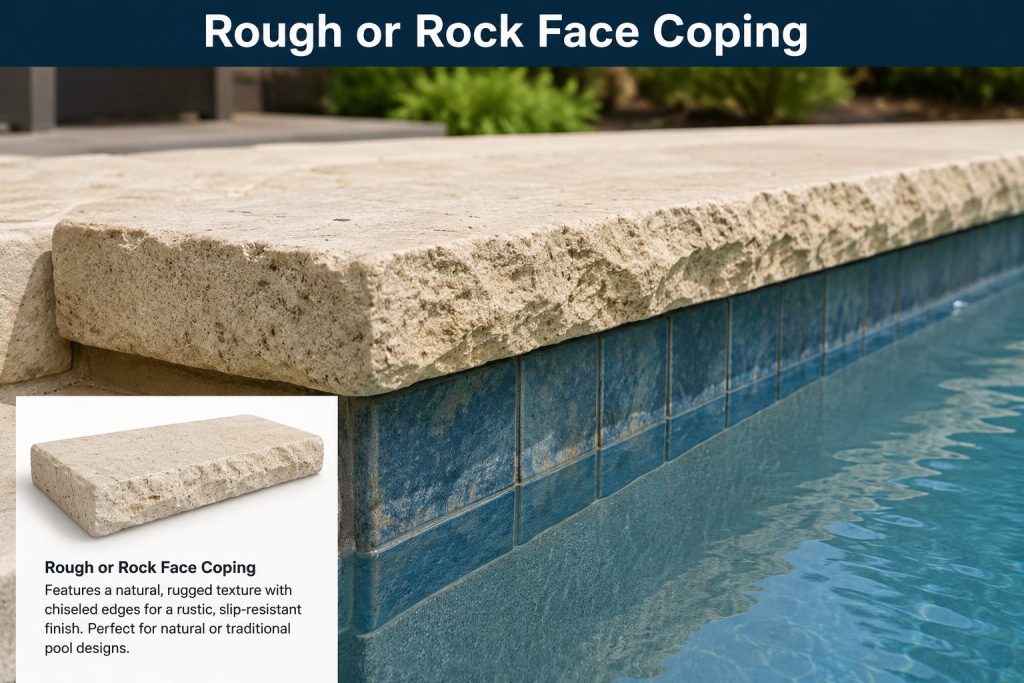
- Rough or Rock Face Coping: Perfect for freeform, lagoon-style pools. The front edge is intentionally chiseled or left natural to mimic a natural riverbed or mountain ledge.
Material Comparison: Basic vs. Premium Pool Coping Options
When budgeting for your backyard project, your material choice will be the biggest variable. Here is how basic materials stack up against premium stone upgrades.
1. Basic Coping Options (Functional & Classic)
- Poured Concrete: Cast right on-site. It allows for a seamless transition into a concrete deck, but it can look industrial over time and is prone to hairline surface cracking under the intense Texas sun.
- Safety Grip Brick: Classic red or earthy-toned clay bricks with a raised, curved lip. They are incredibly durable, but the aesthetic can feel dated depending on your home’s current architecture.
2. Premium Coping Options (Luxury & Durability)
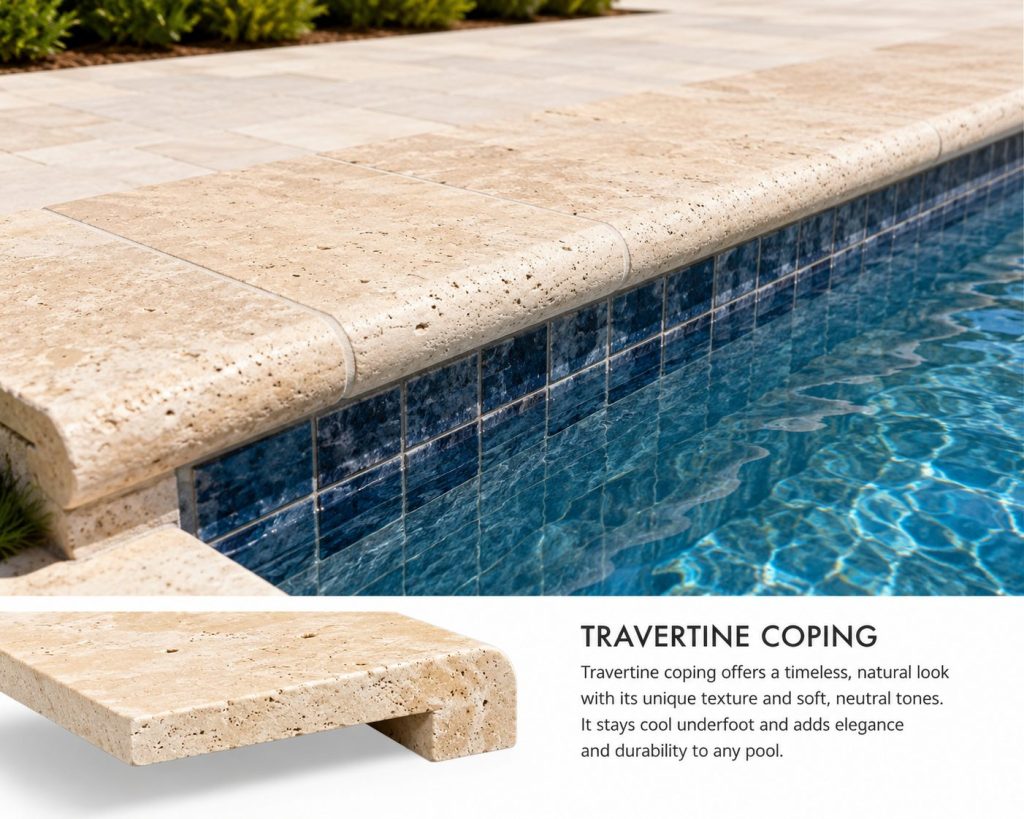
- Travertine Coping: The gold standard for modern Texas pools. Travertine stays remarkably cool to the touch even in 100-degree August heat. It absorbs water naturally, making it highly slip-resistant.
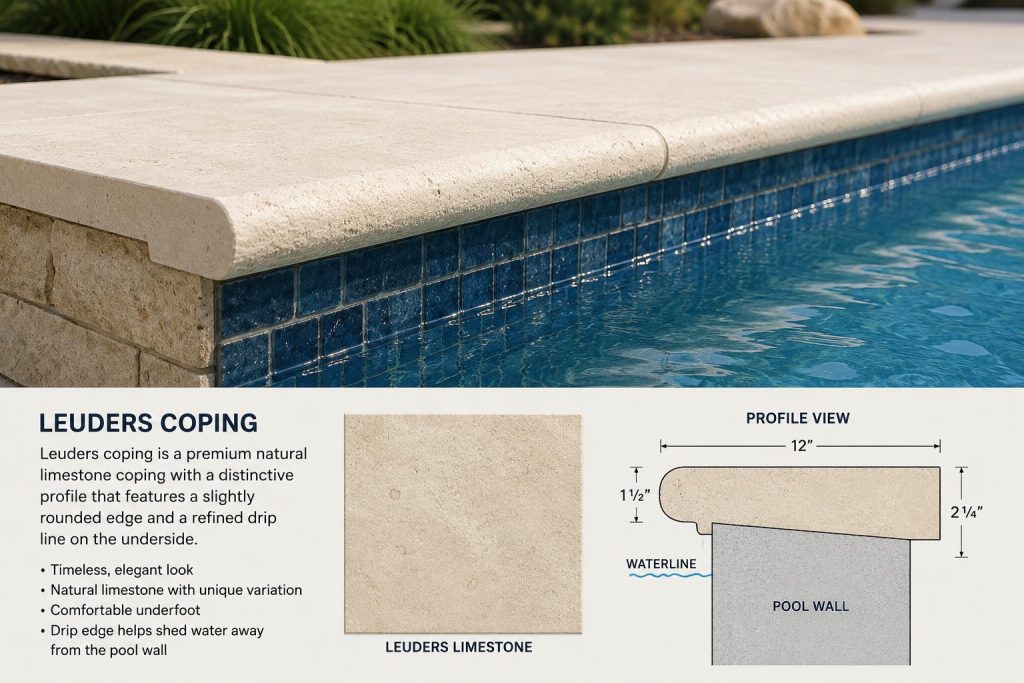
- Leuders Limestone: A beautiful, locally sourced Texas limestone. It comes in stunning gray, buff, and charcoal tones, offering a clean, uniform aesthetic.
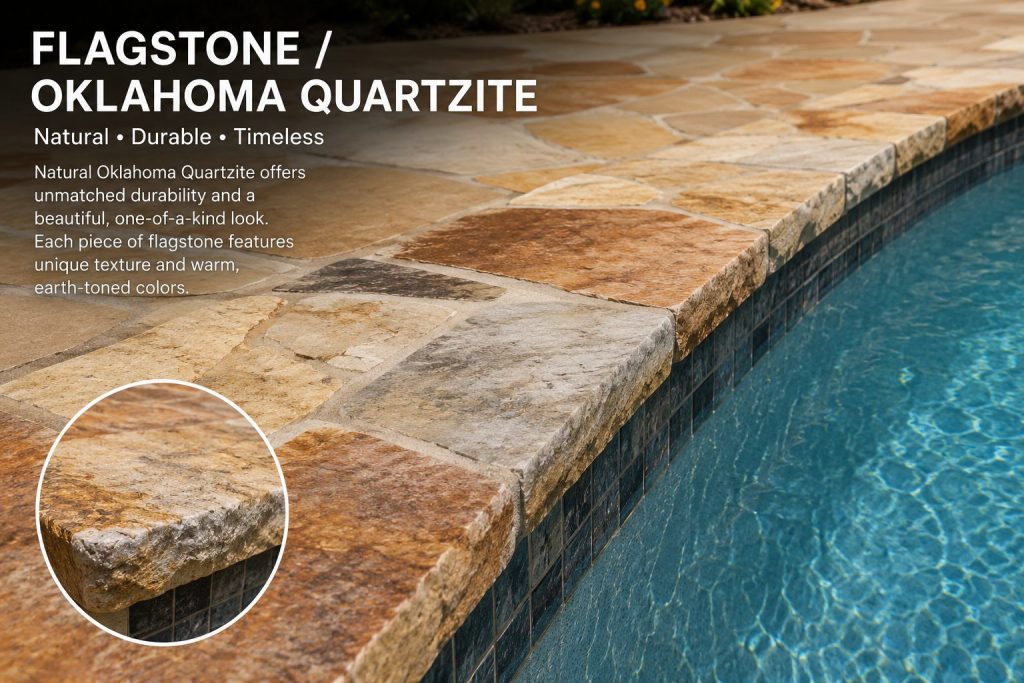
- Flagstone / Oklahoma Quartzite: Offering rich, rustic variations in tans, rusts, and blues, flagstone is the go-to for natural stone waterfalls and freeform shapes.
📸 Inspiration: Ready to upgrade your pool’s aesthetic? View our Pool Remodeling Gallery to see these stone options installed on local DFW projects.
Quick Reference Guide: Basic vs. Premium
| Feature | Basic Coping (Concrete/Brick) | Premium Coping (Travertine/Natural Stone) |
| Average Lifespan | 10–15 years (mortar joints degrade) | 20+ years (highly resistant to wear) |
| Summer Heat Retention | High (can scorch bare feet) | Low to Moderate (Travertine stays cool) |
| Aesthetic Value | Standard, functional, geometric | Custom, high-end, luxury resort feel |
| Maintenance Needs | Requires periodic mortar repairs | Requires high-quality sealer |
The DFW Factor: Why Pool Coping Fails in North Texas
Building or executing a pool repair in North Texas is completely different than doing so anywhere else in the country. Our local metroplex environment presents specific challenges that your coping selection must address:
The Heavy Clay Subsoil Danger
The Dallas-Fort Worth metroplex sits on highly expansive clay soil. When it rains, our soil swells dramatically; during summer droughts, it shrinks and cracks open. This constant movement places immense stress on your pool deck and pool shell.
Because the pool deck moves independently from the gunite pool shell, the expansion joint right behind your coping is your pool’s life jacket. When we install or repair coping, ensuring that this joint is perfectly sealed with a flexible mastic is non-negotiable. If the coping is improperly locked to a shifting deck, the soil movement will literally snap the stone or pop the tiles right off your pool wall.
Extreme Texas Freeze-Thaw Cycles
DFW routinely swings from 105°F summer weeks to single-digit, hard-freeze winter storms. Basic concrete and porous, low-density stones can trap moisture. When a sudden Texas freeze hits, that trapped water expands, causing the stone to flake, crack, or “spall.” Choosing a high-density natural stone like premium Leuders or premium-grade Travertine ensures the stone can survive our freeze-thaw cycles without breaking apart.
Saltwater Conversion Degradation
Many homeowners across Tarrant and Dallas counties have converted their pools to saltwater systems. While salt is milder on your skin, it is brutal on cheap, soft stone. If you select flagstone or soft limestone for a saltwater pool without applying a high-grade, deep-penetrating professional sealer every few years, the salt will recrystallize inside the pores of the stone, slowly turning your premium coping into powder.
Schedule a DFW Pool Coping Inspection Today
If your current coping is cracked, loose, or simply showing its age, addressing it early prevents water from seeping into the surrounding ground and creating major structural deck shifting. Choosing the right material isn’t just about picking a color you like—it’s about matching a style to your home while respecting the intense demands of the North Texas environment.
Don’t let shifting soil damage your investment. Contact the local experts at DFW Pool Experts to ensure your pool remains beautiful and structurally sound for years to come.
Leave a Reply
You must be logged in to post a comment.